
Wood vs Vinyl Privacy Fences Which Is Best for Your Jackson GA Home

A privacy fence in Jackson, GA has to do more than block the view from the road. It has to stand up to humid summers, red clay soil, heavy rain, pollen, and the occasional strong storm. That is why the choice between wood and vinyl matters.
Both materials can make a backyard feel more private and finished. The better option comes down to how much maintenance you want, the look you prefer, your budget, and how long you plan to stay in the home.

Wood privacy fences give a classic look and more design flexibility
Wood is the traditional choice for privacy fencing, and it still makes sense for many homes in Jackson. A wood fence has a warm, natural look that fits well with brick homes, farm-style properties, wooded lots, and older neighborhoods.
With wood, you can choose from several styles:
Standard vertical privacy boards
Board-on-board fencing for fewer gaps
Shadowbox fencing for airflow and a finished look on both sides
Cap and trim details for a more polished appearance
Horizontal boards for a modern style
Wood also gives you more control over color. You can stain it, paint it, or let it weather naturally. If a few boards get damaged, repairs are usually simple. A contractor can replace individual pickets or rails without rebuilding the entire fence.
The tradeoff is maintenance. Jackson’s humidity can be hard on untreated or neglected wood. Over time, moisture can lead to warping, cracking, mildew, or rot, especially near the ground. Sun exposure can also fade stain or paint.
A wood privacy fence works best when it is built with quality lumber, set properly in the soil, and sealed or stained on a regular schedule.
Best fit for wood
Wood is a strong choice if you want a natural look, plan to customize the style, or want a lower upfront cost compared with many vinyl options.

Vinyl privacy fences are low maintenance and clean looking
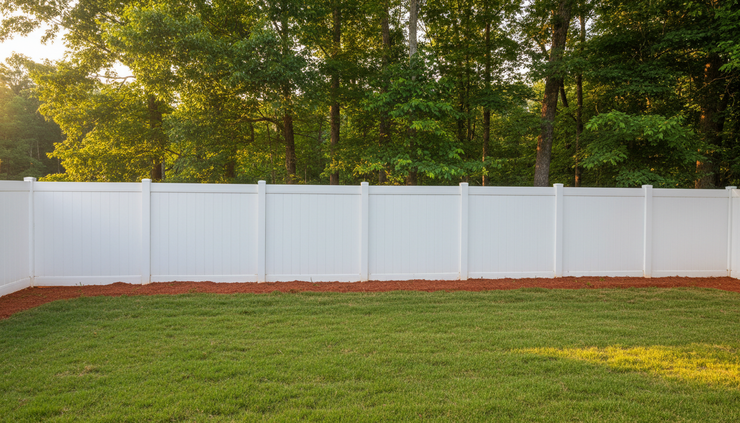
Vinyl privacy fencing has become popular because it solves one of the biggest pain points of wood: upkeep. Vinyl does not need staining, painting, or sealing. It does not rot, and insects do not eat it.
For many homeowners, that is the main selling point. Once installed, vinyl usually only needs occasional cleaning with water and mild soap. In a place like Jackson, where pollen and red clay dust can build up quickly, that easy cleaning is a real advantage.
Vinyl also has a clean, uniform appearance. Most privacy styles use solid panels that create a smooth, finished look. White is common, but some vinyl fences come in tan, gray, and other neutral colors.
The main downside is flexibility. Vinyl does not offer the same natural texture as wood. It can look too bright or too modern for some homes, especially on wooded or rustic properties. Repairs can also be less simple. If a vinyl panel cracks, you may need to replace a full section rather than one small board.
Vinyl typically costs more upfront than basic wood. Still, the lower maintenance can make it attractive over time, especially if you do not want to spend weekends staining or repairing boards.
Best fit for vinyl
Vinyl is a good choice if you want a crisp look, less maintenance, and a fence that resists moisture and insects.
How Jackson’s climate affects the decision
Jackson’s weather should play a big role in the wood vs vinyl decision. Summers are hot and humid. Rain can be heavy. Soil conditions can vary from firm red clay to softer areas that hold moisture.
That means fence installation matters just as much as material. A good privacy fence needs solid post depth, proper spacing, and attention to drainage. Even the best material can fail early if the posts are not set correctly.
Here is how the two materials compare in local conditions:
Feature | Wood privacy fence | Vinyl privacy fence |
Humidity resistance | Needs sealing and care | Resists moisture well |
Appearance | Natural and customizable | Clean and uniform |
Maintenance | Needs staining, sealing, or repairs | Needs occasional washing |
Repairs | Individual boards are easier to replace | Full panels may need replacement |
Upfront cost | Often lower for basic styles | Often higher |
Long-term upkeep | More hands-on | Less hands-on |
If your yard has a lot of shade, wood may hold moisture longer after rain. That can increase the need for maintenance. If your yard gets full sun, vinyl may be easier to keep looking consistent, though some lower-quality vinyl can fade or become brittle over time.
The best result often comes from choosing a quality product rather than picking the cheapest version of either material.
Cost and maintenance should be weighed together
Many homeowners start with price, and that is understandable. A privacy fence is a major home project. But the lowest upfront price is not always the lowest long-term cost.
Wood may cost less to install, depending on the lumber, style, and site conditions. But it also needs regular upkeep. Stain, sealer, replacement boards, and labor can add up over the years. If you enjoy outdoor projects, that may not bother you. If you already have a full schedule, it might.
Vinyl usually costs more at the start, but it reduces the maintenance burden. There is no painting, no sealing, and no rot repair. For a homeowner who wants privacy without frequent upkeep, that can be worth the higher initial price.
Think about these questions before choosing:
How long do you plan to stay in the home?
Do you like the look of natural wood enough to maintain it?
Is your yard shaded, damp, or heavily wooded?
Do you have an HOA with style or color rules?
Would you rather pay less now or maintain less later?
A fence should fit your real life, not just your budget on installation day.
Which privacy fence is best for a Jackson home
For many Jackson, GA homes, vinyl is the better choice when low maintenance is the top priority. It handles humidity well, cleans easily, and keeps a tidy appearance with less work.
Wood is still the better choice when appearance and customization matter most. If you want a natural fence that can be stained to match your home or shaped to fit a specific style, wood gives you more options.
A simple way to decide is this:
Choose wood if you want warmth, character, and design flexibility.
Choose wood if you do not mind staining or repairs.
Choose vinyl if you want easy care, moisture resistance, and a clean finished look.
Choose vinyl if you want to avoid routine sealing and painting.
Neither option is right for every home. A shaded backyard near trees may push you toward vinyl. A large rural lot or traditional brick home may look better with wood. A front-facing side yard may need to match neighborhood rules, while a backyard pool area may need a material that handles moisture well.

The bottom line for Jackson homeowners
If you want the most natural look and do not mind upkeep, choose wood. If you want privacy with the least maintenance, choose vinyl.
Before making the final call, walk your yard after a rain, look at how much shade the fence line gets, and think about how the fence should look from both inside and outside the property. The right material should protect your privacy, match your home, and still look good years from now.


Comments