
Top Benefits of Installing an Aluminum Fence in Fayetteville GA

A fence has to do more than mark a property line. In Fayetteville, it has to handle humid summers, heavy rain, red clay, growing neighborhoods, pets, kids, pools, gardens, and curb appeal. That is why aluminum fencing has become a smart choice for many Georgia homes.
Aluminum gives the clean look of a classic metal fence without the rust problems of traditional iron. It works well around front yards, backyards, driveways, pools, and decorative garden spaces. It also suits many home styles found around Fayetteville, from brick ranch homes to newer craftsman-style builds.
If the goal is a fence that looks polished, lasts for years, and does not demand constant upkeep, aluminum deserves a close look.

Aluminum fencing holds up well in Georgia weather
Fayetteville has the kind of climate that tests exterior materials. Summers are hot and humid. Rain can be heavy. Pollen, moisture, and changing temperatures all wear on outdoor features over time.
Wood fences can swell, warp, crack, or rot if they are not sealed and maintained. Steel and iron fences can rust when protective coatings fail. Aluminum performs differently because it does not rust like iron or steel.
Most residential aluminum fences use a powder-coated finish. This coating bonds to the metal and creates a smooth, durable surface. It helps protect the fence from fading, chipping, and corrosion. Over time, that can mean fewer repairs and a cleaner appearance.
That weather resistance is one of the biggest benefits of installing an aluminum fence in Fayetteville, GA. It is especially helpful in:
Backyards with heavy sun exposure
Shaded lots where moisture lingers
Properties near wooded areas
Homes with sprinkler systems
Pool areas where water is always nearby
No fence is completely maintenance-free, but aluminum comes close compared with many common options.
It gives a clean, upscale look without feeling heavy
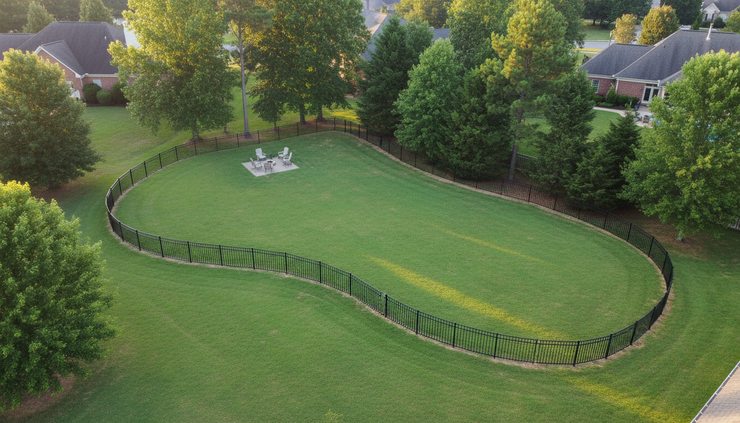
Aluminum fencing has a refined look. It offers the open, vertical lines many people associate with wrought iron, but with a lighter material and easier upkeep.
That open design matters. A tall privacy fence can make a yard feel boxed in. Aluminum lets the property feel defined while still keeping sightlines open. This works especially well if the yard has mature trees, landscaping, a garden, or a view worth keeping.
Aluminum also fits a wide range of home styles. Black is the most common finish because it looks timeless and blends well with brick, stone, siding, and greenery. Other colors may be available depending on the fence manufacturer and installer.
Common design options include:
Flat-top pickets for a simple, modern look
Spear-top pickets for a more traditional style
Decorative rings or finials for extra detail
Arched gates for a softer entry point
Different fence heights for front, side, and back yards
The result is a fence that adds definition without overpowering the home.
Aluminum is easier to maintain than wood or iron
Fence maintenance often sounds manageable at first. Then the seasons pass, paint peels, boards loosen, posts shift, and rust spots spread. For busy homeowners, low maintenance becomes a real advantage.
Aluminum fencing usually needs only light care. A rinse with a garden hose can remove pollen, dust, and grass clippings. Mild soap and water can handle dirt buildup. There is no need for yearly staining, scraping, sanding, or sealing.
That makes aluminum a good fit for Fayetteville homeowners who want a sharp-looking fence without adding another big chore to the calendar.
Here is how maintenance often compares:
Fence material | Typical upkeep |
Aluminum | Occasional rinsing and basic cleaning |
Wood | Staining, sealing, board repairs, pest checks |
Iron or steel | Rust prevention, repainting, spot repairs |
Vinyl | Washing and occasional panel or rail checks |
Aluminum can still be damaged by impact, such as a falling tree limb or a vehicle bump. The difference is that normal weather exposure causes fewer common problems than it does with many other materials.

It can improve safety without blocking visibility
A fence can make a property feel more secure, but not every fence improves visibility. Aluminum strikes a helpful balance. It creates a physical boundary while still allowing a clear view through the pickets.
That visibility can be useful around front yards, driveways, and pool areas. It allows people to see what is happening on both sides of the fence. Parents can keep an eye on children in the yard. Pet owners can create a boundary without completely cutting off the view. Homeowners can protect garden areas while still enjoying how they look.
For families with pets, picket spacing matters. Small dogs may need tighter spacing or a puppy picket style near the bottom. Larger dogs may require a taller fence and secure gates. A good installer can help match the fence style to the household’s needs.
For pools, fencing requirements can vary by location and situation. Fayetteville homeowners should check current city, county, and state rules before installing a pool fence. Gate height, latch placement, spacing, and self-closing hardware may all matter.
Aluminum is often used around pools because it handles moisture well and does not block the view of the water. That makes it both practical and attractive when installed according to the right requirements.
It works well on sloped and uneven yards
Many yards in and around Fayetteville are not perfectly flat. Some slope gently toward the street. Others dip in the back or roll near wooded areas. Fence material and installation method matter on uneven ground.
Aluminum fencing can be installed in two main ways on slopes.
Racked installation follows the slope of the ground. The rails angle slightly so the bottom of the fence stays closer to the grade.
Stepped installation keeps each panel level, creating a stair-step effect as the fence moves uphill or downhill.
Racking often gives a smoother look, while stepping may work better for certain grades or styles. The right choice depends on the slope, fence design, gate placement, and how much space can remain under the panels.
This flexibility makes aluminum a strong candidate for yards with grade changes. It can help avoid the awkward gaps that sometimes appear when a fence is forced onto uneven land.
Aluminum can help define outdoor living spaces
A good fence shapes how a yard feels and functions. It can separate a play area from a garden, frame a pool, protect a patio, or create a clear edge along the front of the property.
In Fayetteville, outdoor living is a big part of home life for much of the year. Patios, fire pits, grills, and backyard seating areas all benefit from clear boundaries. Aluminum fencing gives those spaces a finished look without making them feel closed in.
It also works well with other outdoor features, such as:
Stone or brick columns
Concrete or paver walkways
Driveway gates
Garden beds
Pool decking
Retaining walls
Outdoor lighting
Because aluminum has a thinner profile than many privacy fence materials, it can blend into the yard rather than dominate it. That helps the home and outdoor space feel connected.

It may offer strong long-term value
Aluminum fencing can cost more upfront than some basic wood fencing. The better question is what the fence costs over its lifetime.
Wood may need staining, sealing, board replacement, and pest-related repairs. Iron may need rust treatment and repainting. Lower-cost materials can become more expensive once maintenance and repairs are added over time.
Aluminum often delivers value because it lasts well with less upkeep. Its finish holds up, the material resists rust, and the appearance stays consistent with basic cleaning.
That long-term value can matter when preparing a home for resale. A neat, well-installed fence can improve curb appeal and help the property feel more complete. Buyers may not assign the same value to every fence type, but many recognize the appeal of a clean, low-maintenance metal fence.
The best value comes from choosing the right grade of aluminum, proper post depth, good gate hardware, and professional installation. A fence is only as strong as its layout and installation.
It is a smart choice for pool fencing
Pools need fencing that is durable, secure, and suited for constant exposure to water. Aluminum checks those boxes well.
It does not rot near wet ground. It will not rust like untreated iron. It also keeps the pool area visible, which many homeowners prefer. A privacy fence may block the view of the pool from the patio or house. Aluminum allows for an open view while still creating a controlled boundary.
For pool areas, the details matter. A pool fence may need:
A specific minimum height
Self-closing gate hinges
A self-latching gate
Proper picket spacing
No climbable features in certain areas
Gates that open in the required direction
Local requirements can change, and HOA rules may add another layer. Before installing any pool fence, confirm the rules that apply to the property. A qualified fence contractor should understand common pool fencing standards and help plan the layout accordingly.
Aluminum is practical for pets and children
For many homeowners, fencing is less about decoration and more about daily peace of mind. Aluminum can help create a safe outdoor area for kids and pets while still keeping the yard attractive.
The key is choosing the correct height and spacing. A small dog may need narrow picket spacing or a special lower section. A dog that jumps may need a taller fence. A child’s play area may need secure gates with latches placed out of easy reach.
Aluminum gates also tend to hold their shape well when installed correctly. Wood gates can sag over time, especially in humid climates. A sagging gate can drag, fail to latch, or leave gaps. Aluminum gates are lighter, which can reduce stress on hinges and posts.
This does not replace supervision, but it can make the yard easier to manage.
It can meet HOA style expectations
Many Fayetteville neighborhoods have homeowners associations or architectural guidelines. These rules may affect fence height, color, material, placement, and which side of the property can be fenced.
Aluminum often fits HOA preferences because it looks neat and consistent. Black aluminum fencing, in particular, is common in planned communities because it has a uniform appearance and does not block open views.
Before installation, homeowners should review:
HOA fence rules
Property survey lines
Easements
Utility locations
City or county permit requirements
Height limits for front and back yards
Pool enclosure rules, if needed
Getting these details right before work begins can prevent delays and costly changes. It also helps the finished fence look intentional rather than squeezed into place.
It is available in several grades and styles
Not all aluminum fences are the same. Residential, commercial, and industrial grades differ in strength, rail size, picket size, and overall durability.
Most homes use residential-grade aluminum. It works well for typical yards, pools, and decorative boundaries. Commercial grade may be a better fit for high-use areas, larger gates, or properties that need extra strength.
Style also affects performance. A taller fence with strong posts may be best for pets. A shorter decorative fence may work well in a front yard. Pool areas need safety-focused features. Driveway gates need careful planning because they carry more weight and see more movement than standard walk gates.
The goal is not to choose the heaviest fence every time. The goal is to choose the right fence for the job.
Aluminum has a smaller upkeep footprint
Aluminum is often recyclable, and its long service life can reduce replacement waste. A fence that lasts longer and needs fewer coatings, stains, or repairs can be a practical choice for homeowners who want to reduce ongoing material use.
Wood is natural, but it often needs chemical treatments, stains, or sealers to last outdoors. Vinyl resists moisture, but it can crack over time and is not always easy to repair in sections. Aluminum’s mix of durability, recyclability, and low maintenance gives it a strong position among common fence materials.
For homeowners trying to balance appearance, function, and upkeep, that mix is hard to ignore.
What to think about before installing an aluminum fence
Aluminum is a strong option, but the best results come from good planning. Before choosing a fence, walk the property and think through how the space will be used.
Key questions include:
Where should the gates go?
Will the fence contain pets?
Does the yard slope?
Is there a pool or future pool plan?
Are there HOA rules?
Are underground utilities marked?
Is privacy needed, or is an open view better?
Should the fence connect to an existing structure?
Aluminum is not the best choice when full privacy is the main goal. Its open picket design lets people see through it. Some homeowners pair aluminum with landscaping, hedges, or privacy screens in selected areas. That gives a more natural feel while keeping the benefits of metal fencing.
A well-chosen aluminum fence is built for Fayetteville living
An aluminum fence can add beauty, safety, and structure to a property without creating a long list of maintenance tasks. It handles Georgia humidity well, suits many home styles, works around pools and slopes, and keeps outdoor spaces open and usable.
The best results come from matching the fence to the property. Height, picket spacing, finish, gate hardware, slope handling, and local rules all matter. When those details come together, aluminum fencing becomes more than a boundary. It becomes a lasting part of the home’s exterior.
For Fayetteville homeowners who want a fence that looks polished and holds up season after season, aluminum is one of the most practical and attractive options available.


Comments